Information
Landmark: Sam MountainCity: Mekong Delta
Country: Vietnam
Continent: Asia
Sam Mountain, Mekong Delta, Vietnam, Asia
Overview
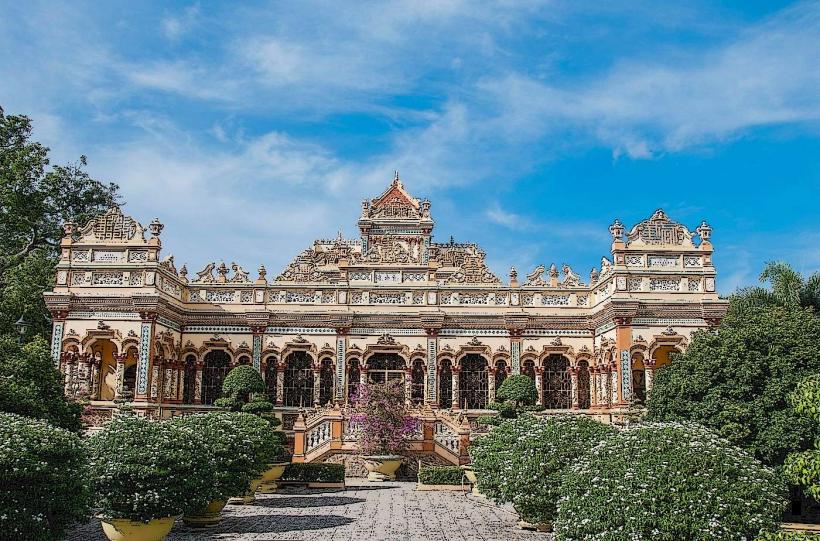
Sam Mountain, or Núi Sam, rises above the flat rice fields of Tịnh Biên District in An Giang Province, deep in Vietnam’s Mekong Delta, not only that it’s more than a famous natural landmark-it’s a destination steeped in culture and history, drawing camera-clicking tourists and pilgrims who leave flowers at its base.Believe it or not, Let’s take a closer examine at Sam Mountain-picture its rocky slopes and wind-swept peak, therefore sam Mountain rises in Vietnam’s far west, just 7 kilometers from the bustling streets of Châu Đốc and a short drive from the Cambodian border in An Giang Province.Rising 230 meters-about 754 feet-above sea level, it’s the tallest peak in the Châu Đốc region, with wind that whistles over its rocky slope, also sam Mountain may not tower by global standards, but it rises among a chain of peaks that frame the Mekong Delta in a patchwork of green hills and winding waterways.As far as I can tell, The mountain’s surroundings burst with lush green slopes, sweeping views that stretch for miles, and a rich history you can almost feel in the worn stones underfoot, what’s more number two.Sam Mountain holds deep cultural and historical importance, with Buddhist temples and pagodas scattered along its slopes, their bells carrying softly in the wind, what’s more for centuries, people have treated the mountain as sacred, drawing pilgrims from every corner of Vietnam-some arrive barefoot, clutching incense sticks.At the base of Sam Mountain, the Ba Chua Xu Temple rises quietly among the trees, standing as one of the mountain’s most pivotal sacred sites, after that it’s dedicated to Ba Chua Xu, the revered local goddess people believe watches over the land and everyone in it, like a quiet guardian at the edge of the rice fields.Funny enough, Scattered across the mountain, the Tay An Pagoda, Hang Pagoda, and Vinh Te Temple stand as quiet markers of the region’s rich spiritual and cultural past, their incense-scented halls echoing with history, and number three.Perched on Sam Mountain, Bà Chúa Xứ Temple draws thousands of pilgrims each year to honor the local goddess, Ba Chua Xu, making it one of southern Vietnam’s most visited holy sites, where incense smoke drifts through the warm air, after that inside the temple complex stands a towering statue of the goddess, and each 5th lunar month it comes alive during the Ba Chua Xu Festival, when thousands of pilgrims and tourists crowd the stone courtyard, generally The temple sits at the base of Sam Mountain, where many visitors take their first steps toward the winding trail up, likewise tay An Pagoda (Chùa Tây An) sits at the foot of Sam Mountain, a striking 19th-century Buddhist temple whose curved roofs and vivid carvings mix Vietnamese grace with Cambodian flair.Visitors can wander through a serene, lovely site, where towering Buddha statues rise above and vivid murals glow with color, then hang Pagoda (Chùa Hạnh) is a compact, lovely shrine tucked inside a cool cave halfway up the mountainside.The Hang Pagoda feels calm and still, perfect for quiet meditation, and it’s tucked away enough that you won’t hear the bustle from nearby temples, and the cave, with its cool stone walls and echo of dripping water, radiates a calm that draws visitors looking for peace and a touch of the spiritual.Perched on Sam Mountain, Vinh Te Temple honors the local deity Vinh Te, and its incense-scented halls remain a significant region of worship, consequently though smaller than the Ba Chua Xu Temple, this one gives visitors a rare glimpse into local worship, from the scent of burning incense to the quiet murmur of prayers.Number four stood alone, a modest, neat digit like chalk on a board, at the same time though Sam Mountain isn’t especially high, it rewards hikers with sweeping views of the Mekong Delta’s patchwork rice fields and even a glimpse of the Cambodian border shimmering in the distance.On a clear day, you can spot green rice fields, winding rivers, and tiny villages scattered across the region’s landscape, what’s more visitors can hike up Sam Mountain and catch their breath at the summit, where a broad overlook stretches toward the hazy horizon, under certain circumstances You make your way to the top along a smooth, stone-paved path, pausing now and then to take in a quiet overlook or a stretch of wildflowers, alternatively the trail can push you a little, but most people make it just fine-and when you reach the top, the sight of the valley spread out below is worth every step, a little If you love nature, Sam Mountain’s the destination to be, with wild orchids clinging to its rocky slopes and birds calling from the trees, not only that thick forests wrap around the mountain, alive with the scent of damp earth and a tangle of tropical plants.Because the mountain sits far from busy roads, it’s kept much of its wild charm-songbirds call from the pines, insects hum in the grass, and other wildlife still roams freely, as well as five, roughly One of Sam Mountain’s biggest events is the Ba Chua Xu Festival, held each year in the fifth lunar month-usually in May or June-when the air fills with the scent of incense and the sound of drums, meanwhile each year, the festival honors Ba Chua Xu, the region’s revered goddess, drawing thousands of pilgrims from across Vietnam and even beyond its borders, their hands full of incense and glowing marigolds, in some ways The festival bursts to life with incense-filled ceremonies, lively processions through the streets, and colorful cultural performances, not only that visitors can soak in local traditions and watch incense curl upward as offerings and prayers are made at the Ba Chua Xu Temple.It’s a cherished celebration for the community, and it gives visitors a rare chance to step into Vietnamese spirituality-incense curling in the air, drums echoing in the distance, and traditions alive all around, alternatively number six stood alone, a tiny obscure mark on the otherwise blank page.You can reach Sam Mountain easily by road from Châu Đốc, a riverside town linked by smooth highways to other cities across the Mekong Delta, in turn from Châu Đốc, you can hop on a bus, grab a taxi, or drive yourself to the foot of Sam Mountain, where the air smells faintly of incense, in some ways By boat, you can ride from Châu Đốc along the Vinh Te Canal, where the water slides past the base of Sam Mountain, besides on the boat ride, you’ll observe the shoreline unfold in sweeping views, with pine-covered hills rising from the water, giving you a fresh angle on the whole area.Seven, on top of that the prime time to visit Sam Mountain is in the dry season, from November to April, when the air turns cooler and the trails feel inviting beneath your boots.Festival Time: Held in May or June, the Ba Chua Xu Festival is a great time to visit, with incense curling into the warm air and a chance to immerse yourself in local culture and sacred rituals, also eight.Sam Mountain draws crowds of visitors, but with them come problems-trash left along the trails and novel buildings creeping up around its base, and still, people are working to protect the mountain’s cultural and natural treasures, from its quiet, incense-scented temples to the forests that ring its slopes, perhaps Number nine, bold and simple, sits alone like a black ink mark on a blank page, also if you’re headed to An Giang Province, don’t miss Sam Mountain - its winding trails and sweeping views make it unforgettable.The mountain blends wild beauty with deep cultural roots and a rich spiritual past, offering a calm that settles over you like cool morning air, consequently hike to the summit for a sweeping view of green fields, wander through ancient temples and weathered pagodas, or join the lively crowds of the Ba Chua Xu Festival-Sam Mountain has something for nature lovers, history buffs, and spiritual seekers alike.
Author: Tourist Landmarks
Date: 2025-09-16